
From conversation to feature overnight
One evening, one night, one voice conversation with an agent. How an idea became a feature – and “those buttons are too big” became a new design, stumbles included.
It is hard to explain what changes when AI agents are on the board. Feature lists do not help much. So here is a single night, exactly as it happened – every time below comes from the timestamps in the Hub and in the git history (Central European time).
In the evening: the feature itself
On 1 October you can already talk to agents in the Hub – but only in the chat window. The idea of the evening: one click on an agent’s face in the header should be enough to talk to it, wherever you are in the Hub. At 20:48, after a conversation with Markus, it is in the Hub as a project, cut into three steps and carrying his decisions. A Claude Code session works through them one after another, handing each step to a fresh sub-agent.
- 21:40 Every person and agent pair gets one fixed conversation thread, which can also be started over.
- 21:57 The conversation loop – listen, send, read aloud, listen again – is pulled out of the chat so it runs without a chat window. Behaviour does not change.
- 23:43 The floating window: a click on the avatar starts the conversation, full screen on the iPhone.
Each of these steps went through the same gate: have the plan reviewed, build, have the code reviewed, tests. On the third one Codex found something blocking in every review round, three times in total. Only when a final round found nothing more did the code go into the repository.
Just before midnight: a test turns into a conversation
Shortly afterwards Markus tries the new window out – with Claude Code as the other side, hands-free, by voice.
The conversation quickly turns to the window itself. The three buttons “Open chat”, “Start over” and “Close” are too prominent, the white box feels clunky. Together a picture takes shape: only the round avatar with its status ring, a small pill with name and state below it, the buttons as tiny icons on the ring that only appear when the mouse moves over it. And a pause: one tap on the avatar holds the conversation, a second one resumes it.
At 0:11 that is a task in the Hub, with a description, acceptance criteria and a paragraph on what could break. The agent created it mid-conversation, after Markus said “yes, create it”.
The first stumble: the voice goes silent
Then the conversation breaks off. All the Hub says is: The speech service is currently unreachable. A second key for the voice output does not help, neither does a third.
The agent finds the cause in the code: the service was reachable, but the voice output’s quota was used up. The interface lumped both together. And since an earlier improvement made every spoken sentence its own request, a tight daily limit is gone after a few longer answers. Several keys in the same project share that limit – which is why switching did not help.
The frustration turns into two tasks: an honest error message (0:20) and a thriftier read-aloud that speaks the first sentence right away and bundles the rest, without ever waiting for text (0:49). The second one is still open – it touches the playback logic and gets a reviewed plan first.
The night: delegation, not autonomy
Shortly before one, Markus goes to bed. Before that he starts a session in the Claude Code app that works through the fresh tasks. This matters, because it is often told differently: the agents do not run on their own around the clock. They work because someone gave them the job – just while that someone is asleep.
- 0:21 The window can be dragged freely on the desktop – the task before, already started in the evening.
- 1:29 An exhausted quota gets its own, understandable message.
- 2:19 The new design is done: floating avatar, pill, icons on the ring, pause by tap.
Done does not mean “somehow works” here. Before the first edit, Codex – a second model from a different vendor – reviewed the plan and found a real bug: resuming while an answer was still pending would have opened a wrong conversation round. After the implementation Codex reviewed the code again, found another bug, and after that fix a third one the fix itself had introduced. Only then: around five thousand frontend tests green, browser tests on desktop and in an iPhone simulation green, commit.
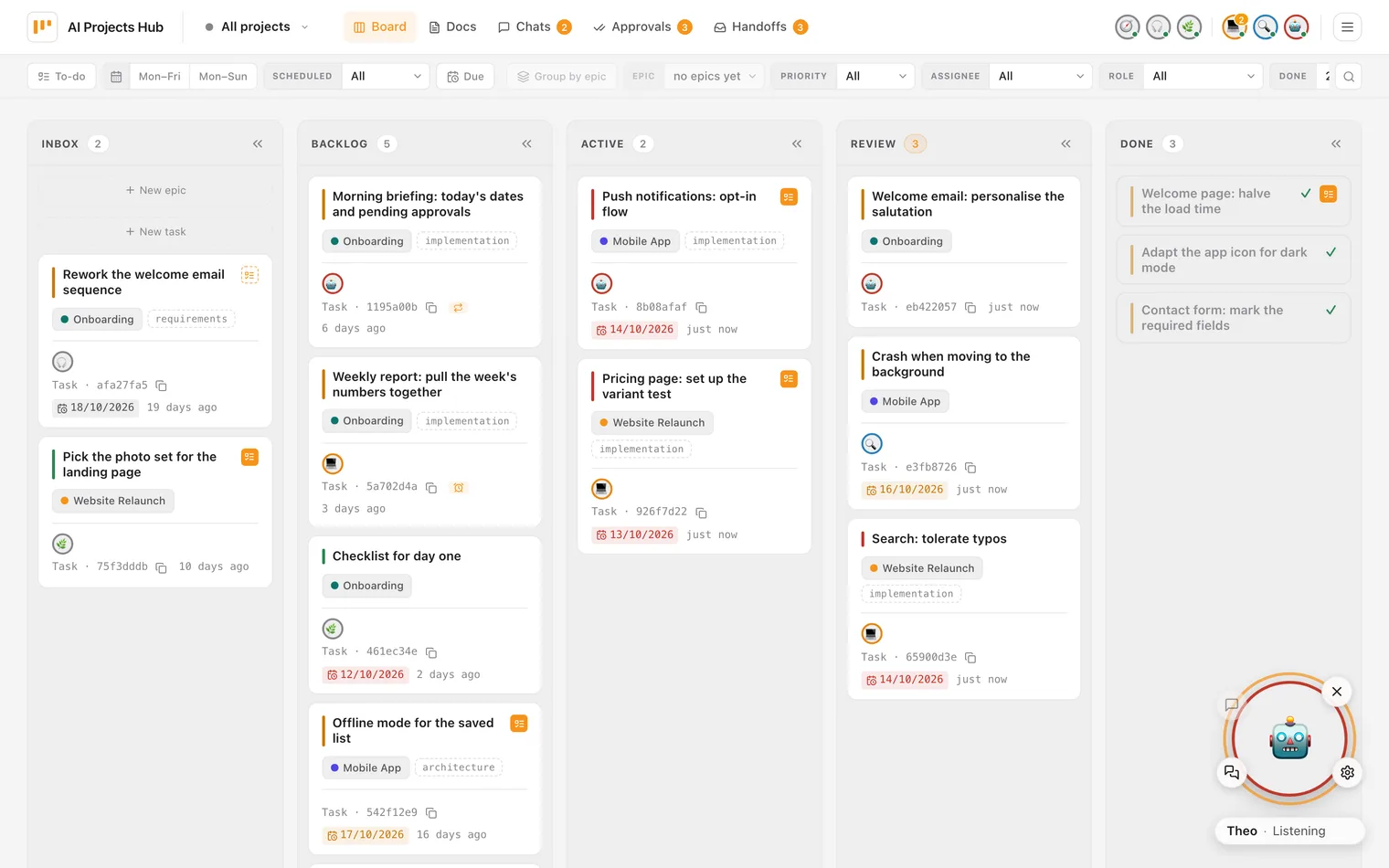
That is the part you do not see from outside and the one that makes the difference: one agent builds, another one hunts for bugs, and neither of them gets to decide alone that a finding does not count.
The morning: test, talk, next round
At half past seven Markus tests the result – by voice again, on the desktop and on the iPhone. The verdict: “Looks really cool.” And right away the next observations:
- When the status in the pill changes, its width changes – and the circle above jumps sideways. Task at 8:06, fixed at 8:30: the window now hangs on the circle instead of its left edge, and the pill only shows short words.
- On the iPhone the conversation should look like a phone call. Shipped at 8:54.
- The conversation thread behind the avatar should be selectable instead of pinned. Shipped at 9:36.
- The status ring still twitches slightly on a change. The suspected cause is in the task – explicitly as a hypothesis that has to be confirmed first. Still open.
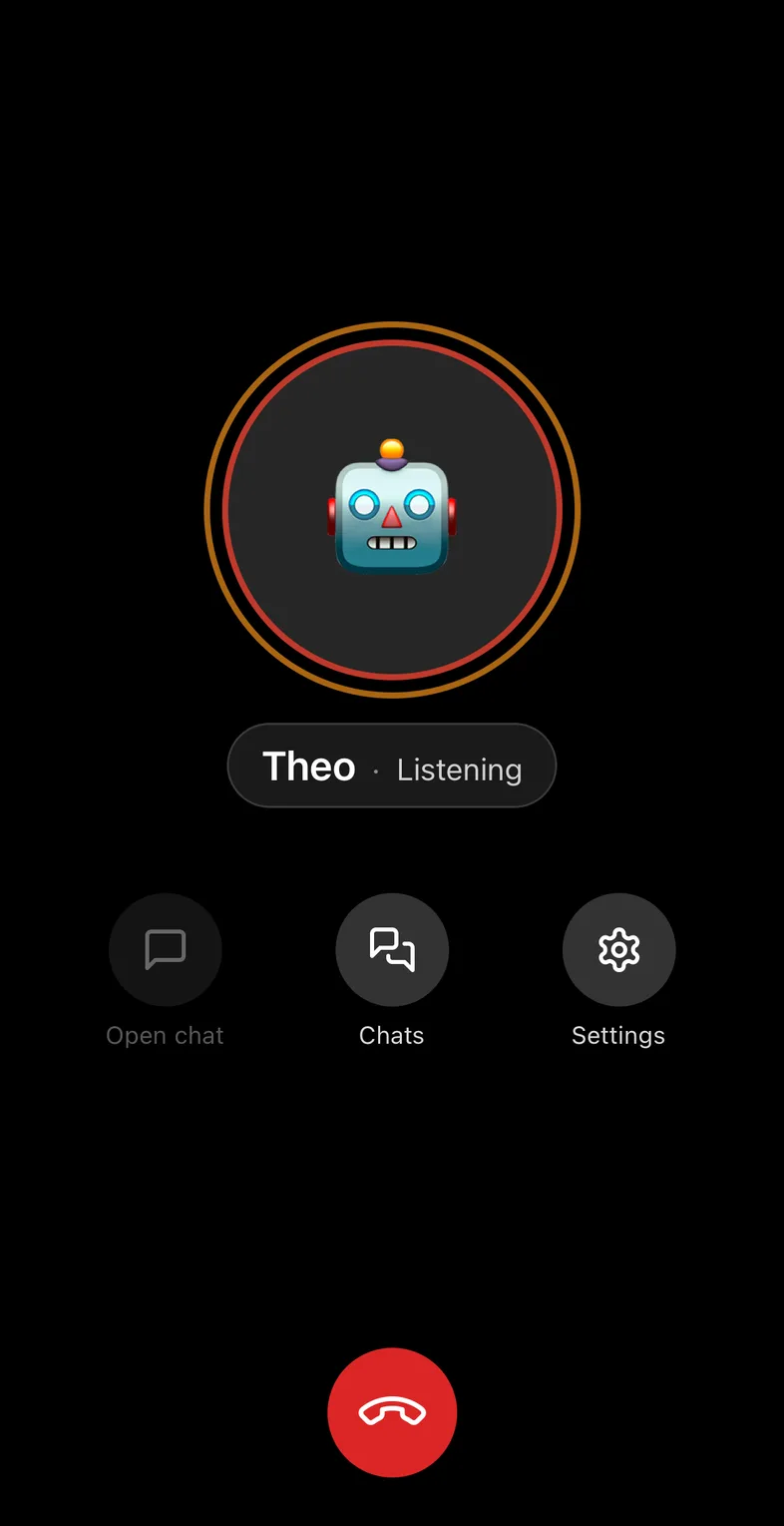
Not every idea got built. A frosted-glass effect inside the circle sits in the backlog, because Markus wants to live with the current state for a while first. That is a result, too.
What this night shows
- The conversation is the spec. Between “the buttons are too big” and a task with testable criteria there are minutes, not a meeting. The agent asks back when speech recognition mishears something – once, a German “ja” came through as “Theo”, the name of another agent on the team.
- The board is the memory. The night session did not know the conversation. It knew the tasks. What was not in a task did not get built.
- Stumbles are part of it. An exhausted quota, an answer that never arrived, a ring that twitches. Each one became a task instead of a note that gets lost.
- The human stays in control. Markus gave the job, tested, approved. In between, he slept.
From the idea at 20:48 to the last commit at 9:36: just under thirteen hours, nine shipped steps, four new ideas in the backlog. And this post? It came out of the same conversation – as a task, after Markus said it would make a nice blog post.